

 061: Archaeological Tour in Egypt: Giza, Saqqara, Luxor and a Nile cruise to Aswan

General Information
 An academic training course in the form of a ten-day archaeological tour of Egypt, conceived not as a conventional tourist trip but as a field course. The group visits the best-known monuments of Egyptian civilization and also other places in the Nile Valley that are rarely visited, accompanied at all times by a guide and by an expert in Egyptian archaeology who explains each site from the point of view of research: how it was excavated, what is known and what is still under discussion. The route combines Cairo and its surroundings with a cruise on the Nile between Luxor and Aswan.
The aim of the course is for students to get to know at first hand the fundamental archaeological sites of Egypt and to learn to read them as an archaeologist does: to identify building phases, iconographic programs, stone-working techniques and funerary contexts, and to understand how archaeological research has built the knowledge we have today of that civilization.
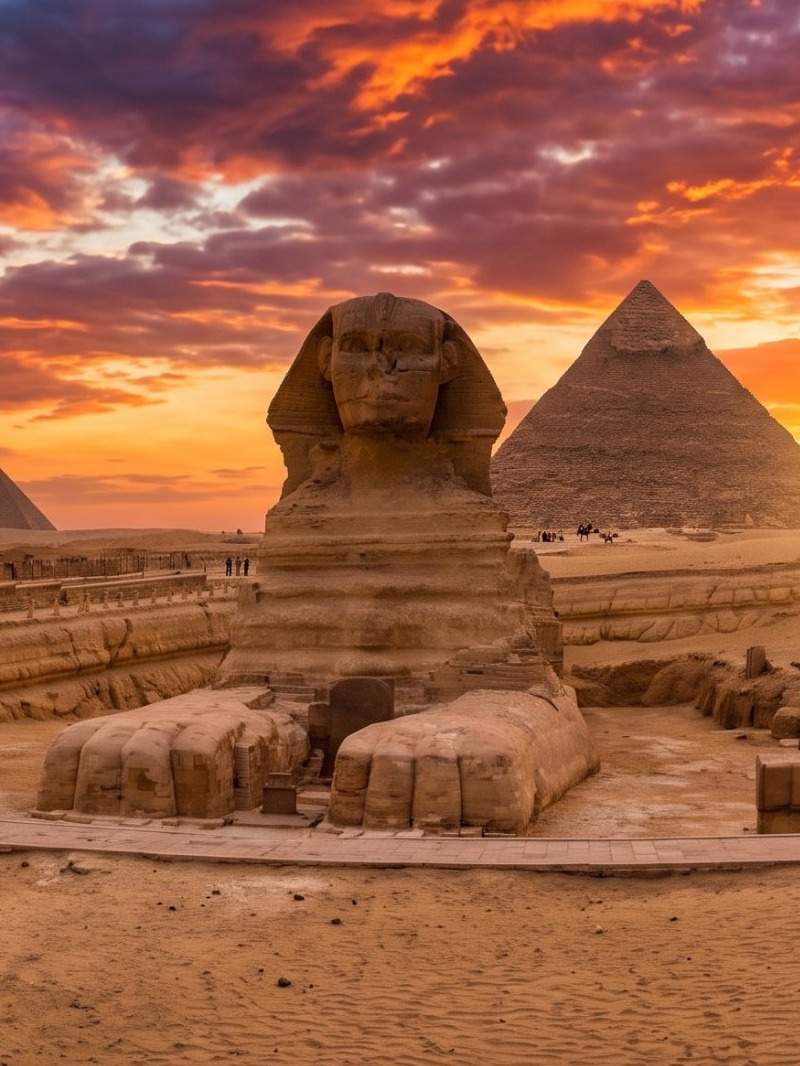
The starting point is the pyramids of Giza, the only one of the Seven Wonders of the ancient world still standing, with the Sphinx and the valley temples of the 4th Dynasty (c. 2600-2500 BC), and the Grand Egyptian Museum (GEM), which holds the complete burial goods of Tutankhamun and the solar boat of Khufu, together with the Egyptian Museum in Tahrir. From Cairo the group reaches Saqqara and Dahshur, two less frequented necropolises that explain the origin of the pyramid: the step pyramid of Djoser, the mastabas of the high officials, the Serapeum with the burials of the Apis bulls, and the Bent and Red pyramids of Sneferu.
In Upper Egypt two sites away from the usual circuits are visited, the temple of Hathor at Dendera and that of Seti I at Abydos, center of the cult of Osiris, and then ancient Thebes: Karnak and Luxor on the east bank and, on the west bank, the Valley of the Kings, the temple of Hatshepsut and the Colossi of Memnon. The final stretch is made on board a Nile cruise, one of the most attractive experiences of the course: for four nights the boat sails up the river from Luxor to Aswan and the journey itself becomes a lesson in historical geography, with stops at the Ptolemaic temples of Edfu and Kom Ombo, the First Cataract, a felucca ride and the sanctuary of Isis at Philae, the last pagan temple of Egypt to close, in the 6th century.
The itinerary follows, from north to south, a large part of the historical sequence of Egypt, so that students can relate each monument to its period:
- Early Dynastic period (c. 3100-2700 BC): Abydos, cemetery of the first kings and origin of the cult of Osiris; the Narmer Palette in the Tahrir Museum.
- Old Kingdom (c. 2700-2200 BC): Saqqara, Dahshur and Giza, from the step pyramid to the great pyramids; mastabas and royal statuary.
- New Kingdom (c. 1550-1070 BC): Thebes with Karnak, Luxor, the Valley of the Kings and Deir el-Bahari; the Abydos of Seti I; the burial goods of Tutankhamun at the GEM.
- Ptolemaic and Roman period (332 BC-4th century AD): Dendera, Edfu, Kom Ombo and Philae, with their late temple architecture, and the Serapeum of Saqqara.
- Late Antiquity and Christian Egypt: reuse of temples as churches, the closure of Philae and the first Coptic communities, visible at several of the sites on the route.
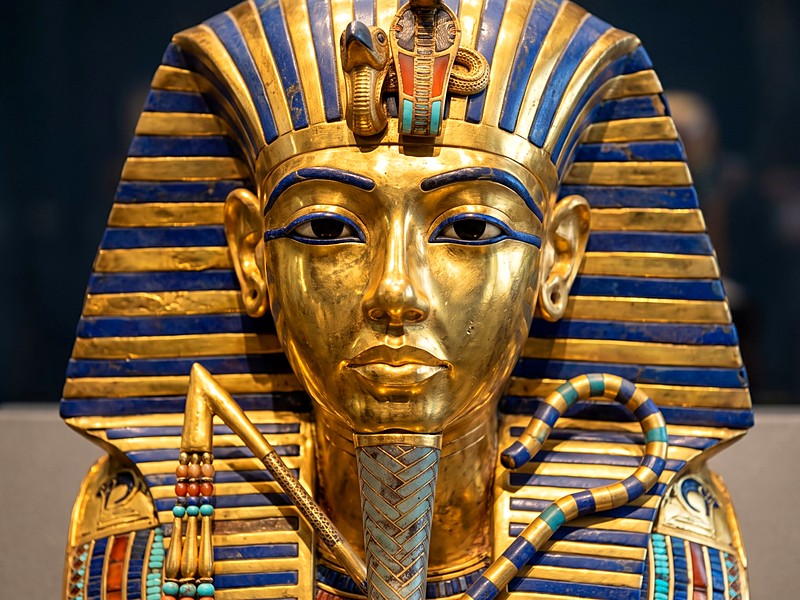
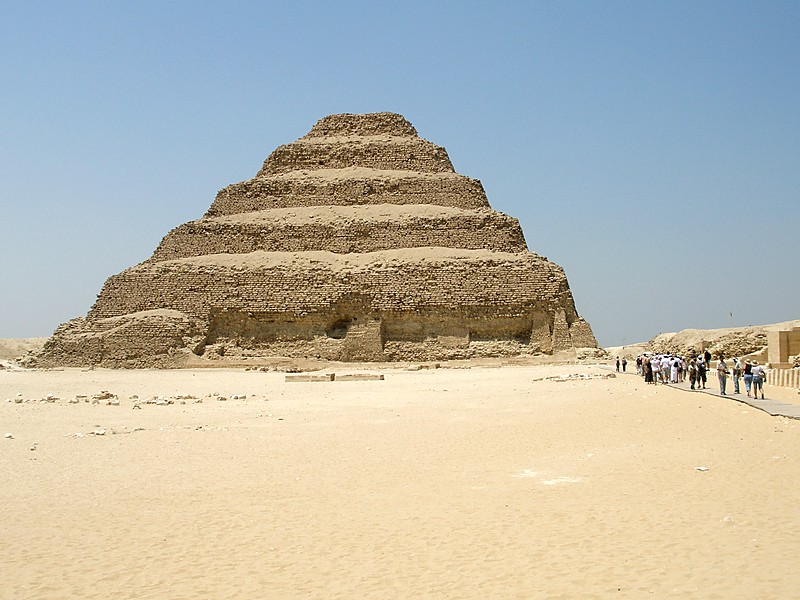
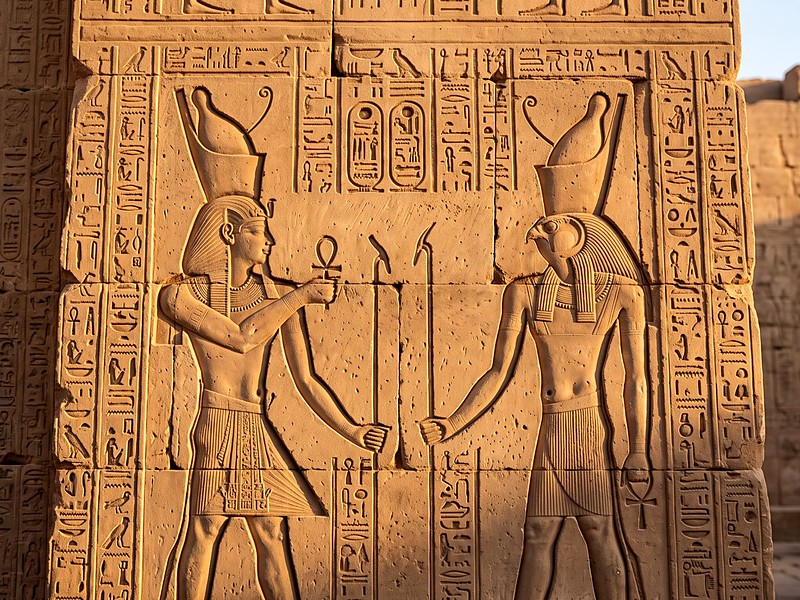
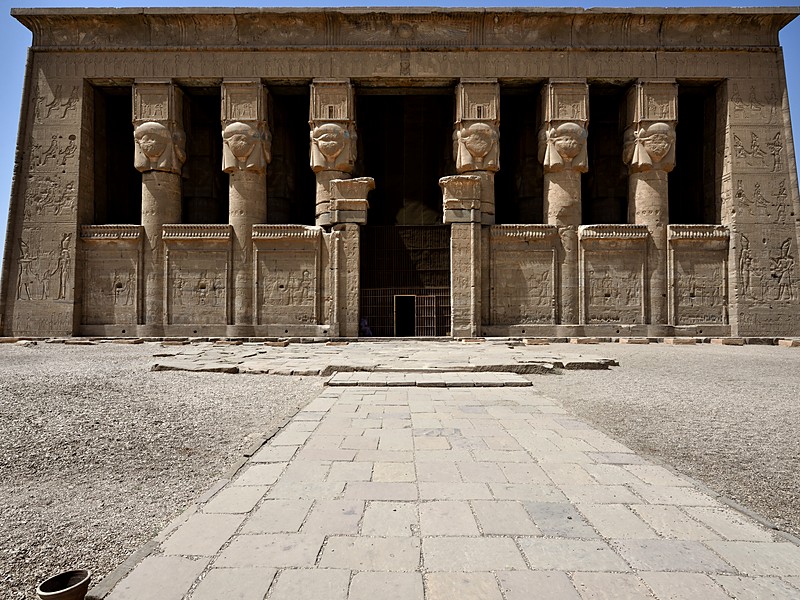
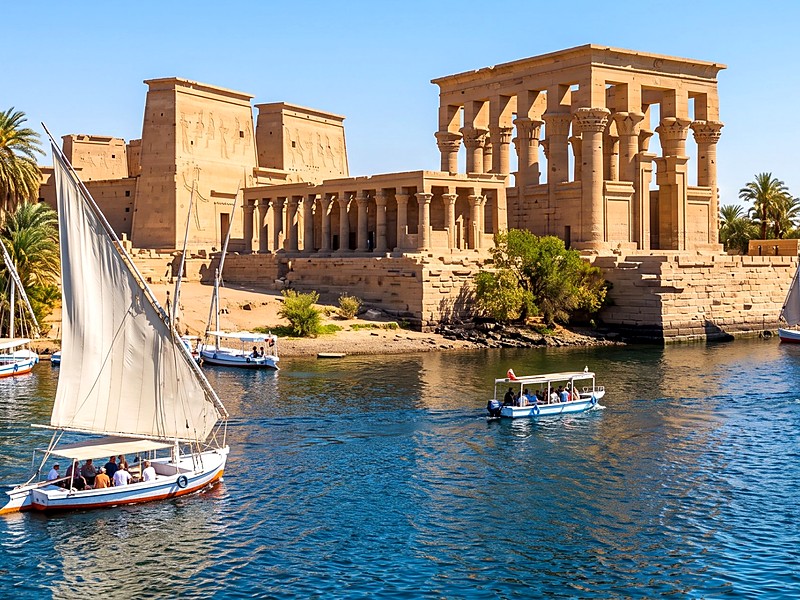
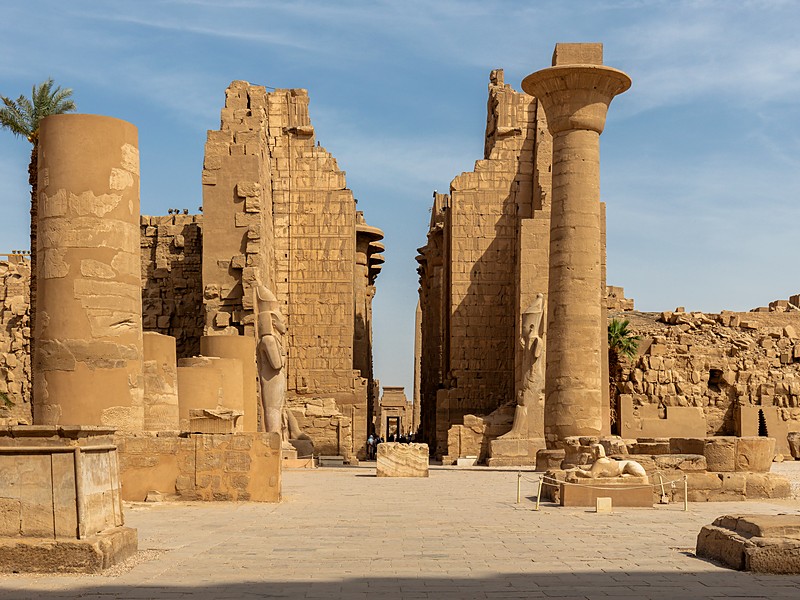
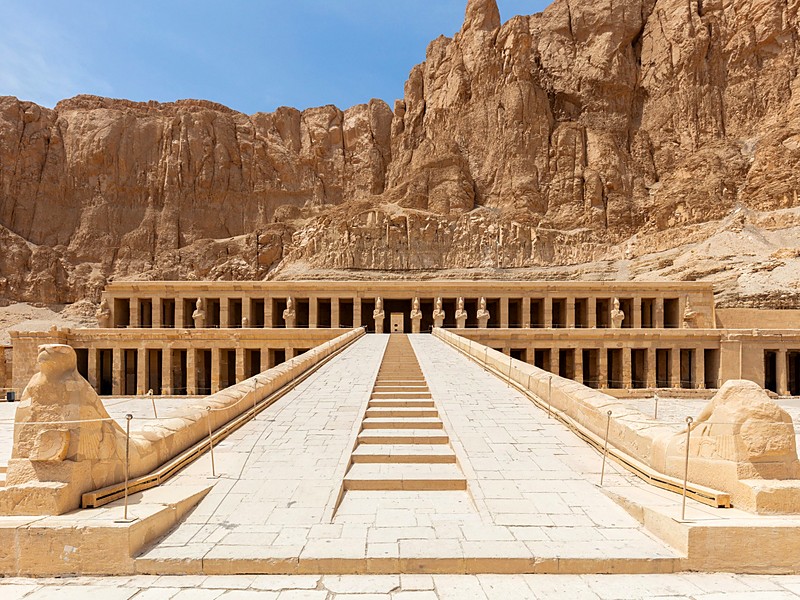
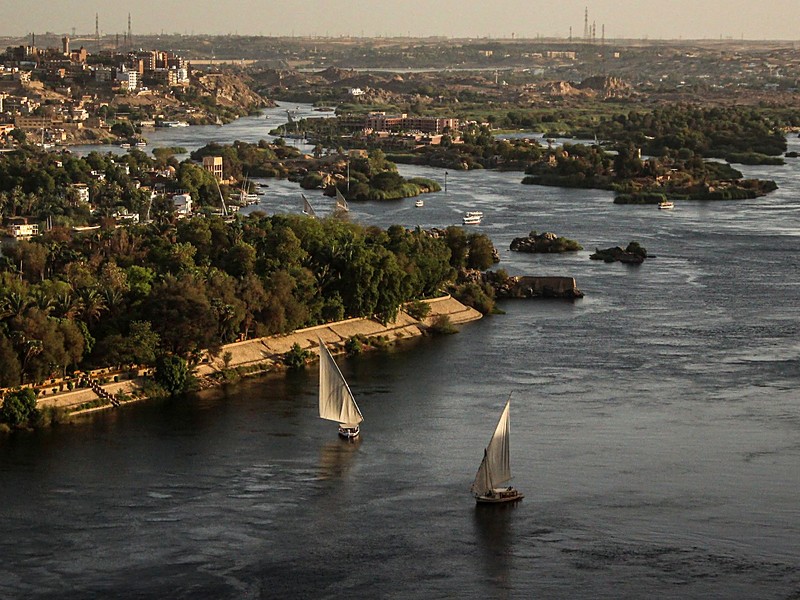
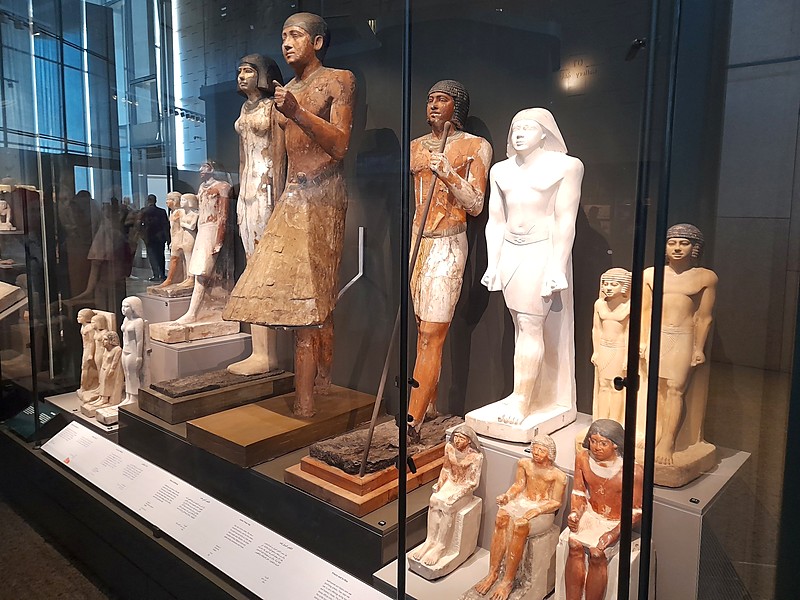
Photo credits: Photo 2 by Vyacheslav Argenberg (CC BY 4.0); Photo 4 by Hamerani (CC BY-SA 4.0); Photo 6 by Diego Delso (CC BY-SA 4.0).