

 Research and Publications
Sanisera (Field School)
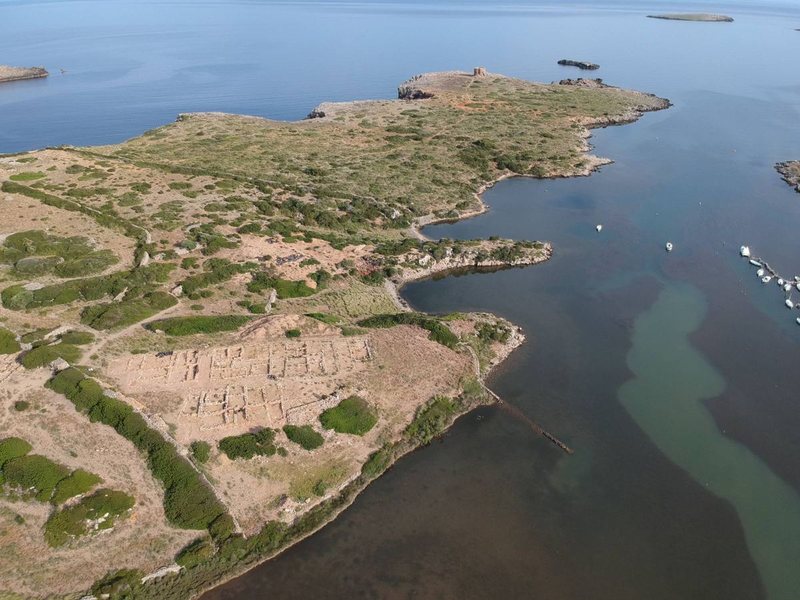
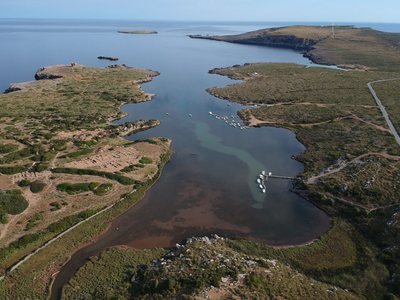 Pliny the Elder names Sanisera as one of the three towns of Menorca (Natural History III, 77). Excavation by the Institute and its students has traced the site from a Roman army camp of 123 BC to a Christian centre that lasted into the early Middle Ages. These are the 22 publications on the site, ordered by topic. Each title links to the publication.
Topics: Roman Republican camp and sling bullets · Harbour and underwater archaeology · Late Antique ecclesiastical complex · Necropolises and bioarchaeology · Pottery, coins and material culture · Heritage management and digital methods · The site, its name and its history · The field school
Roman Republican camp and sling bullets
The camp founded after the Roman conquest of 123 BC and the lead projectiles of the Balearic slingers
Die Bleifunde der römisch-republikanischen Anlage von Sanisera, Menorca: archäologische und archäometrische Analyse
Müller, R. (2018). Archaeopress Roman Archaeology 46 (monograph, 266 pp.).
An archaeological and archaeometric study of the unusually large lead assemblage from the Republican fort at Sanisera, founded after 123 BC and abandoned in the last third of the 1st century BC. The finds are analysed in context and compared across the Mediterranean to place the fort in Rome’s expansion.
El asentamiento militar romano de Sanitja (123–45 a.C.): una aproximación a su contexto histórico
Contreras Rodrigo, F.; Müller, R.; Valle de Tarazaga, F. J. (2006). Mayurqa 31: 231–249.
A decade of research on the Roman army camp at Sanitja Bay. Lead sling bullets document how Balearic slingers, prized since Punic times, joined the Roman military system, and shed light on recruitment, training and local participation in Rome’s wars of the late 2nd and 1st centuries BC.
Harbour and underwater archaeology
Punic and Roman wrecks, cargoes and trade routes at the mouth of Sanitja
Navegación y comercio en la Antigüedad Tardía. La aportación del Puerto de Sanitja (Menorca) a través de la arqueología subacuática
Contreras Rodrigo, F.; Talavera Montes, A. J. (2024). In M. Á. Cau Ontiveros (ed.), Las islas Baleares durante la Antigüedad Tardía. Archaeopress: 278–293.
A review of the underwater evidence from Sanitja, from stamped Late Roman amphorae to single wrecks. Goods from Zeugitana and Byzacena dominate 3rd–4th century cargoes; the roles of Leptis Minor, Hadrumetum, Neapolis and Carthage as a redistribution hub are discussed.
Underwater surveys in northern Menorca: material assemblages and shipwrecks
Roberts, J. (2019). Inquiry@Queen’s Undergraduate Research Conference Proceedings.
Based on a 2016 underwater survey of the shelf off Menorca’s north coast, this student paper combines amphorae and wrecks from Sanisera and the port of Sanitja with geospatial analysis to outline late Roman maritime trade (4th–7th centuries AD).
Dos naves púnicas en el norte de Menorca en el siglo IV a.C. (Puerto de Sanitja, Es Mercadal)
Talavera Montes, A. J.; Contreras Rodrigo, F. (2015). Arqueología y Territorio 12: 105–119.
Amphora assemblages recovered off Sanitja in annual underwater campaigns since 2007 are assigned to two Punic ships wrecked in the 4th century BC. The repertoire is used to reconstruct the trading routes these vessels sailed in the Post-Talayotic period.
El puerto de Sanitja y la pesca de coral en el siglo XVIII
Talavera, A. J.; Contreras, F.; Massó, P. (2014). Àmbit 32, Consell Insular de Menorca.
A sandstone weight with five holes, found at four metres depth during the 2011 survey, is identified through parallels as part of a coral-fishing dredge used near the port in the 18th century, and placed within the local history of fishing.
Estudio de las ánforas de la África bizacena localizadas en el fondo subacuático del Puerto de Sanitja (Menorca)
Contreras Rodrigo, F.; Talavera Montes, A. J.; Massó, P. (2013). V Jornades d’Arqueologia de les Illes Balears (Documenta Balear): 119–126.
About thirty African amphorae (Africana II C/D, Keay VI–VII) and Baetican types from the harbour mouth are read as the cargo of a ship from the Tunisian coast, wrecked c. AD 300–350, probably after loading oil and fish products in southern Hispania.
Late Antique ecclesiastical complex
Basilicas, the Christian community and buildings 10 and 11 (4th–9th centuries AD)
On the beginnings of Christianity at the Port of Sanitja (Menorca, Balearic Islands, Spain). The radiocarbon dating of Tombs 11 and 16 in ‘Necropolis 3’
Contreras Rodrigo, F. (2026). Annals of Archaeology 8(1): 66–80.
Radiocarbon dates of AD 388–402 for two Christian graves in necropolis 3, supported by a coin of Theodosius I. As the graves were cut inside the building, the basilica must be older, probably c. AD 350–375. Possible African and Tarraconensian origins of the community are discussed.
Aproximación al estudio de la ciudad romana de Sanisera (Sanitja, Menorca)
Bravo Asensio, C.; Contreras Rodrigo, F. (2013). V Jornades d’Arqueologia de les Illes Balears (Documenta Balear): 189–198.
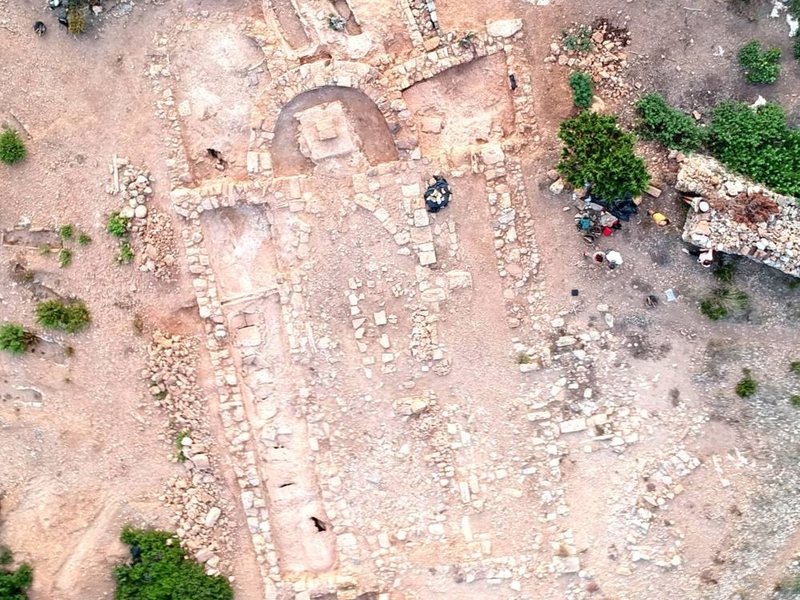
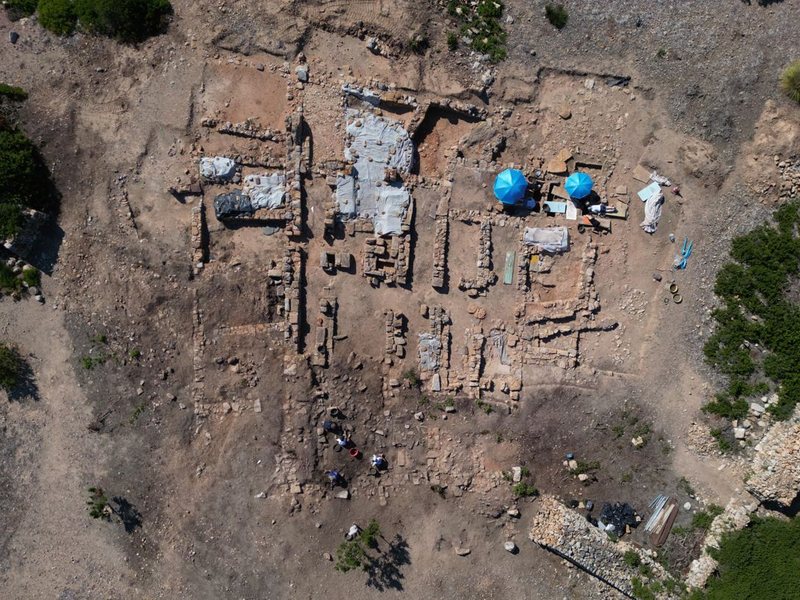
Buildings 10 and 11, excavated in 2008–2012 over 1,250 m², are presented. Building 10, a large residential and craft complex, was built in the 4th century and used until the 9th. Both are proposed as part of a Vandal-period ecclesiastical complex, possibly a monastery with lodging for pilgrims.
Necropolises and bioarchaeology
Late Antique cemeteries, collective tombs, diet and funerary ritual
Study of tombs with grave goods containers in the Late Roman necropolis 04 of the Port of Sanitja, Menorca (5th–7th century AD)
Contreras, F.; Alonso, A.; Vila, B. (2025). Journal of Research in Humanities and Social Science 13(7): 07–22.
Necropolis 04 holds 78 tombs around a funerary basilica built c. AD 500 and used until the late 7th century. Five tombs contained ceramic jars or a glass bottle, and residue analysis identified oil. The skeletons are studied against the funerary rite and Balearic parallels.
Estudio bioarqueológico de las necrópolis de Sanisera (Sanitja, Menorca)
Pacheco, G.; Olivares, C.; Hurts, J.; Contreras, F. (2013). V Jornades d’Arqueologia de les Illes Balears (Documenta Balear): 205–212.
Fifty-four collective cist graves from necropolises 6 and 4, dated to the 5th–6th centuries AD, laid out in rows and designed for repeated reuse; one child was buried in a reused African amphora. Anthropological data accompany the funerary analysis.
Pottery, coins and material culture
Dating and trade through ceramics and 941 coins
Novedades sobre la numismática de Sanisera (2008–2014)
Bravo Asensio, C.; Contreras Rodrigo, F.; López Delgado, J. L. (2015). Àmbit 35, Consell Insular de Menorca.
941 coins from the 2008–2014 excavations, mostly Late Roman with Vandal and Byzantine issues, including a follis of Justinian I and four exagia (coin weights). With the pottery, they date the excavated area mainly to the 5th and 6th centuries AD.
Cerámica de la antigüedad tardía de la ciudad romana de Sanisera (Port de Sanitja, Menorca)
Valente, T.; Contreras, F. (2013). V Jornades d’Arqueologia de les Illes Balears (Documenta Balear): 199–204.
The pottery from the 2008–2012 excavations: residual Republican and Early Imperial wares give way to North African dominance from the 3rd century, an intense phase c. AD 450–600 and decline in the 7th. Trade shifts from Italy and Hispania towards Africa, with Ibiza as a likely redistributor.
Heritage management and digital methods
GIS, the BOIRA recording system and the protection of the site
BOIRA Survey (BOIRA Campo): georeferenced archaeological photo recording. Version 13.0
Contreras Rodrigo, F. (2026). Zenodo (software paper).
A free, offline web app that links each field photograph to site, grid square, stratigraphic unit, UTM position, bearing and accuracy, and exports PDF reports, spreadsheets and open GIS layers. Field examples come from Sanisera and the port of Sanitja.
Aplicación de un SIG a la arqueología subacuática de Menorca
Contreras Rodrigo, F.; Fernández Sánchez, A. (2022). Virtual Archaeology Review 13(27): 135–155.
A GIS built on the 285 underwater records of the Menorca archaeological charter (wrecks, anchorages, isolated finds). Geophysical and environmental variables identify likely ancient anchorages and coastal sectors where new remains are expected, and suggest areas for protection.
Reivindicando acciones de gestión acordes a la excelencia arqueológica del Puerto de Sanitja
Contreras Rodrigo, F. (2021). Culturas. Revista de Gestión Cultural 8(2): 85–99.
Argues that the Port of Sanitja, the most distinctive archaeological area of northern Menorca, deserves institutional protection, and proposes a management framework comparable to the master plans used for major sites elsewhere in Spain.
B.O.I.R.A., software para el registro de prospección y excavación arqueológica de época clásica
Contreras Rodrigo, F. (1997). Annals de l’Institut d’Estudis Gironins 38: 1685–1703.
The first version of the BOIRA recording system, designed for several teams surveying and excavating Classical sites: bibliography, survey and excavation records, project accounts and permit and funding procedures in one database.
The site, its name and its history
Syntheses, early survey and the identification of Sanisera with Sanitja
El puerto romano de Sanisera (Sanitja, Menorca)
Contreras Rodrigo, F.; Carcacer Fabregas, N. (2024). In M. Á. Cau Ontiveros (ed.), Las islas Baleares durante la Antigüedad Tardía (siglos III–X). Archaeopress: 443–447.
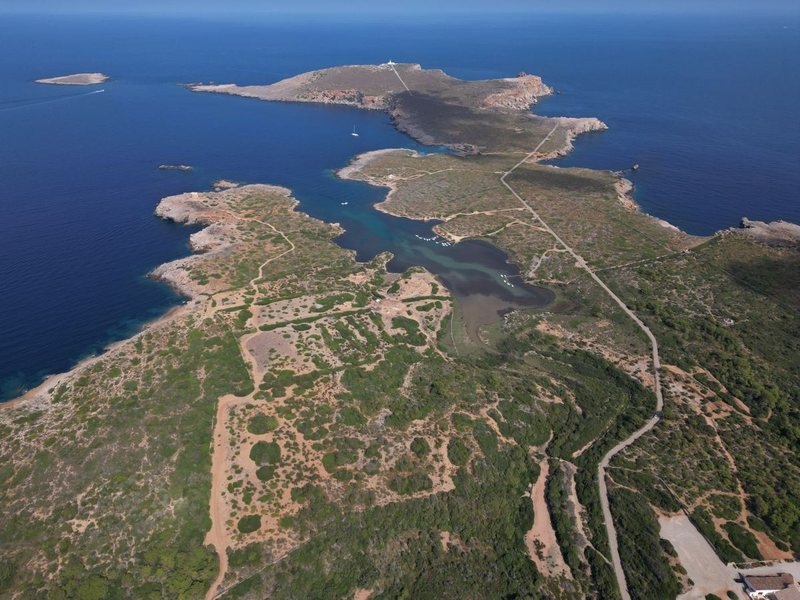
An overview of the site: a Roman military camp founded after the conquest of 123 BC, a town occupied until the early 9th century and at its height c. AD 450–600, six necropolises and wrecks at the harbour mouth. Current work centres on a basilica found in 2015 and on annual underwater survey.
El topònim preromà de Sanisera
Jaquemot Ballarin, A. (2007). Butlletí de la Societat d’Onomàstica 104–105: 197–202.
A linguistic study of the pre-Roman name Sanisera, taking its survival in modern Sanitja as given. Three etymologies are weighed, Indo-European, Punic and Iberian, and the Iberian reading (sani-sera, ‘port-peninsula’) is preferred.
Una mezquita en Sa Nitja (Menorca)
Kirchner, H. (1999). II Congreso de Arqueología Peninsular, vol. 4: 691–694.
A small building on the North Point of Sanitja, excavated in 1979 and then read as a lighthouse, is identified as a rural mosque of the Andalusi period: a prayer room of 2.8 × 9.6 m with a semicircular mihrab facing south-east, built without mortar from reused Roman ashlars, with parallels at Guardamar, Xara, Miravet and Segesta.
Sa Nitja. Gestió del patrimoni mediterrani: resultats de les campanyes de prospecció a la ciutat romana de Sanisera (Es Mercadal, Menorca)
Contreras Rodrigo, F. (1997). Annals de l’Institut d’Estudis Gironins 38: 1649–1668.
Results of the first survey campaigns at Sanisera, whose research project won the 1992 Fundació «la Caixa» prize for Roman cities of Catalonia and the Balearics. The paper assesses the site historically and archaeologically, reviews where earlier scholars placed Sanisera, and considers its public presentation.
The field school
How the research is taught and how students earn credit
The Sanisera Archaeology Institute field school: a long-standing academic model in the service of archaeological field research
Contreras Rodrigo, F. (2026). Zenodo (report).
Survey at Sanisera since 1993, student excavation since 1996 and an international school since 2004. The report describes the teaching offer, from excavation and biological anthropology to underwater survey and digital methods, and the assessment model that universities use to award credit.