

 Research and Publications
Missions Abroad (UAE)
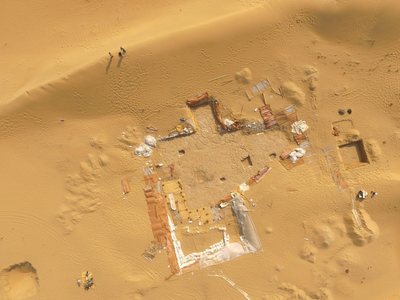
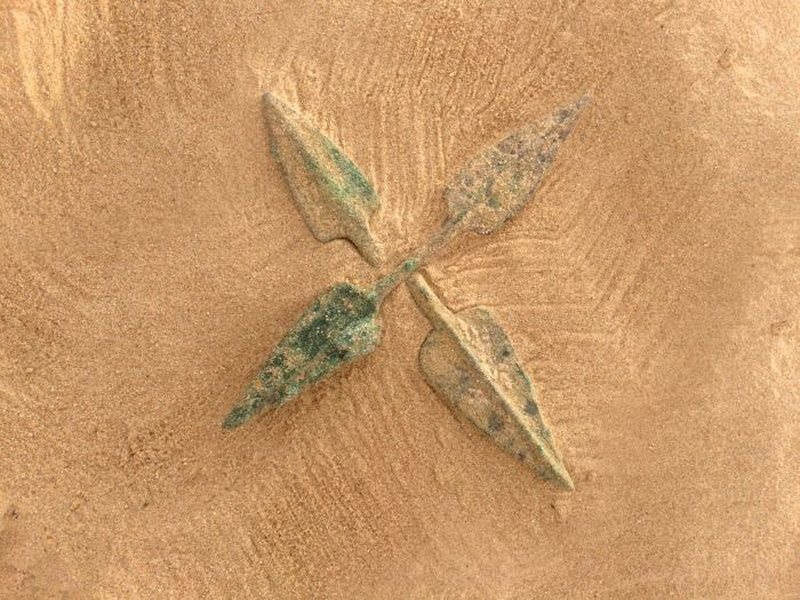
Excavation and survey carried out by Sanisera teams with the heritage authorities of Dubai, from the dunes of the Rub‘ al-Khali to the Hajar Mountains at Hatta. These are the 17 publications of our missions, ordered by site. Each title links to the publication.
Topics: Saruq al-Hadid · Al Qusais necropolis · Suhaila (Hatta) · Hatta: Jabal al-Yamh tombs · Desert settlement and ancient coastlines
Saruq al-Hadid
Iron Age II metallurgy and ritual in the dunes of the Rub‘ al-Khali
New insights on metallurgical and ceremonial activity during the Iron Age II in SAR53, Saruq Al-Hadid (Dubai, UAE)
Vilanova, E.; Contreras, F.; Fernández, E.; Boraik, M.; Reddy, A. (2026). Annals of Archaeology 8(2): 54–74.
The 2025 excavation of Areas O and T at SAR53 documented a main phase (c. 9th–early 8th century BC) that combines copper production with ritual deposits: snake figurines, snake-decorated pottery and weapons. A later phase involved charcoal production.
Iron Age copper production and the ‘ritual economy’ of Saruq al-Hadid (Dubai, UAE)
Weeks, L.; Valente, T.; Franke, K.; Contreras, F.; Boraik Radwan, M.; Zein, H. (2024). Advances in UAE Archaeology (Archaeopress): 239–270.
A review of copper smelting, refining and casting at Saruq al-Hadid, often found in contexts tied to votive offerings to a snake deity. The authors read production and deposition through a ‘ritual economy’ linked to social cohesion and authority in Early Iron Age south-east Arabia.
Five seasons of excavations in Areas 2A and G of Saruq al Hadid (Dubai, UAE): Iron Age II evidences of copper production, workshop area and ceremonial activities
Valente, T.; Contreras, F.; Mahmud, A.; Boraik Radwan Karim, M.; Saif Al Mansoori, M.; Zein, H. (2020). ISIMU 23: 169–195.
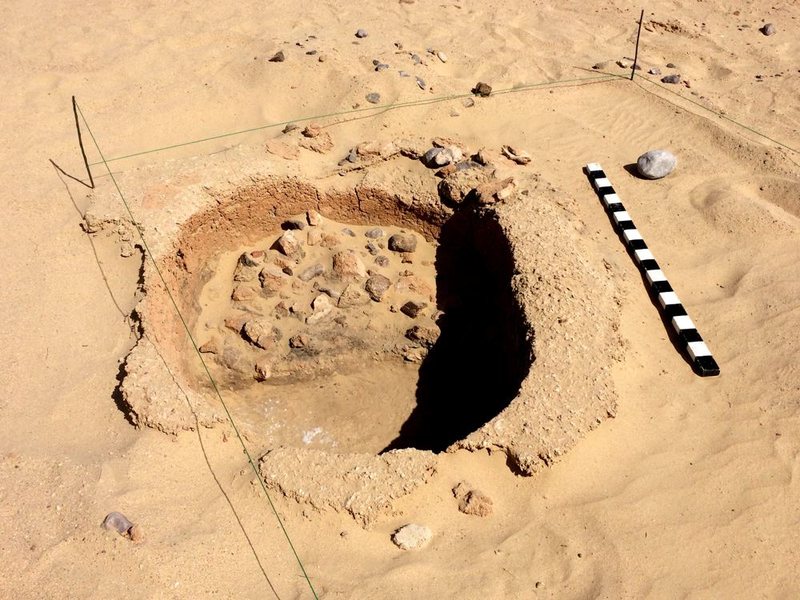
Five seasons uncovered more than twenty pit-like combustion structures. Metalwork, raw materials and tools indicate jewellery production, while votive finds (figurines, snakes, miniature weapons, soft-stone and ceramic vessels) with parallels in cult places point to a site with religious meaning.
Anthropomorphic figurines from Area 2A of Sārūq al-Ḥadīd, Dubai, UAE
Valente, T.; Contreras, F.; Mahmud, A.; Al Ali, Y. Y.; Boraik Radwan Karim, M. (2019). Proceedings of the Seminar for Arabian Studies 49: 283–292.
More than twenty copper anthropomorphic figurines came from Iron Age II charcoal deposits linked to pit-like combustion structures. Their style has no known parallels, which suggests local production. Their function is unknown, but they may relate to ceremonial practice.
Goldwork technology at the Arabian Peninsula. First data from Saruq al Hadid Iron Age site (Dubai, United Arab Emirates)
Soriano, I.; Perea, A.; Escanilla, N.; Contreras Rodrigo, F.; Al Ali, Y. Y.; Boraik Radwan Karim, M.; Zein, H. (2018). Journal of Archaeological Science: Reports 22: 1–10.
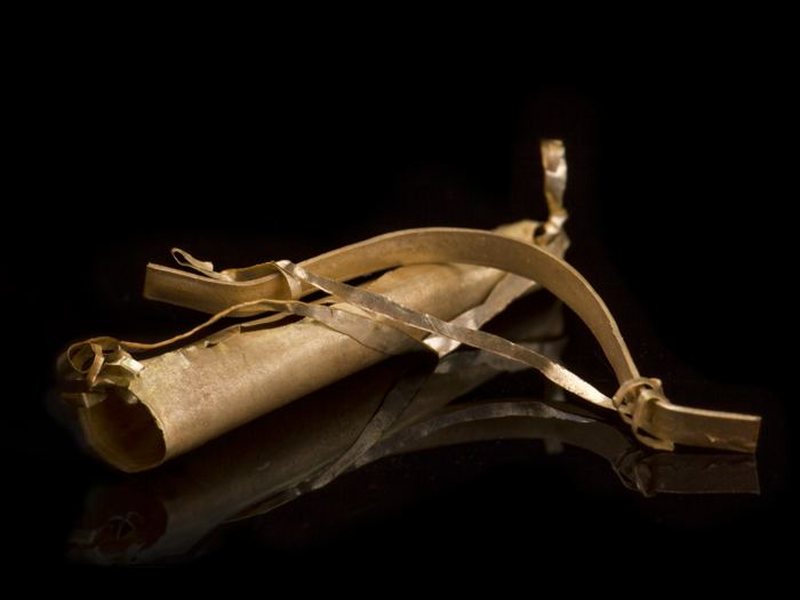
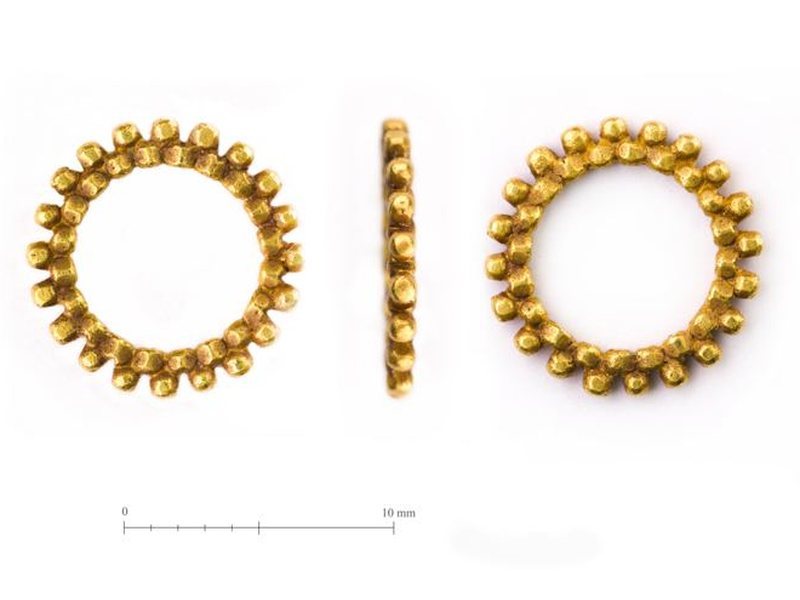
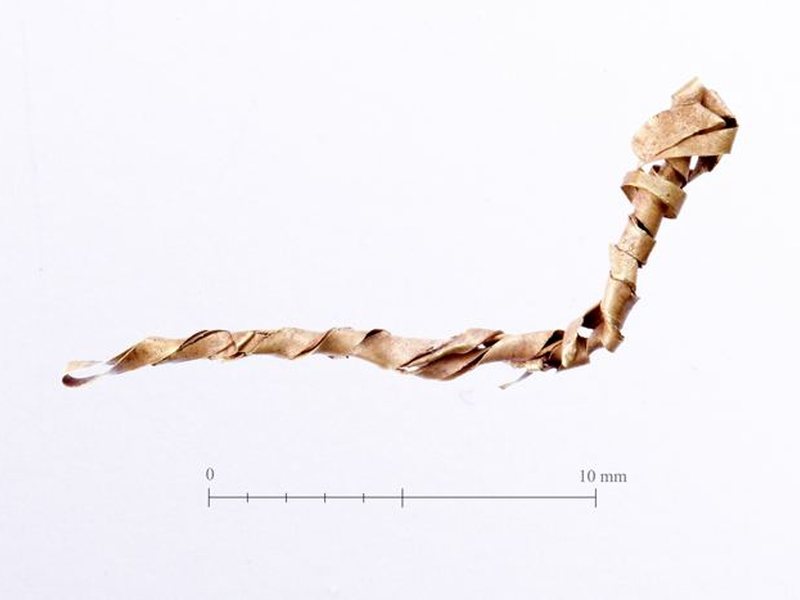
About 450 gold items from the 2015–2017 campaigns were studied by optical microscopy and SEM-EDS. The results point to a gold workshop, the first archaeologically attested in the Arabian Peninsula, using lost-wax casting, filigree, granulation and polychrome alloys.
Excavations in Area 2A at Sarūq al-Ḥadīd: Iron Age II evidence of copper production and ceremonial activities
Contreras Rodrigo, F.; Vila, B.; Albarracín, P.; Bukhash, R. M.; Al Abbar, S. O.; Boraik Radwan Karim, M.; Zein, H. M. (2017). Proceedings of the Seminar for Arabian Studies 47: 57–67.
Slag, ore nodules, crucibles and copper objects from Area 2A point to copper smelting and probably artefact manufacture. Copper snakes, figurines and soft-stone vessels, deposited in a deliberate way, suggest ceremonial use. Typology and radiocarbon place the site in Iron Age II.
Al Qusais necropolis
Bronze and Iron Age burials, chronology and bioarchaeology
Bioarchaeological research in the Al-Qusais necropolis (Dubai, UAE): funerary dynamics, chronology and sex determination through dental proteomics
García Martín, R.; Contreras, F.; Al Ali, B.; Boraik, M.; Zein, H. M.; Al Masfari, M. (2026). Annals of Archaeology 8(1): 17–26.
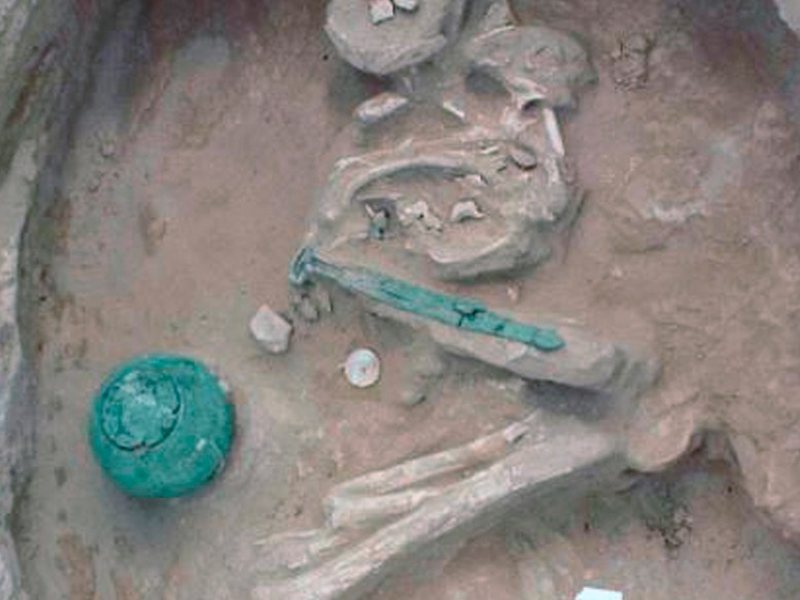
Dates and mollusc analysis place the necropolis at about 1400–750 BC beside a former mangrove coast. With bone too poorly preserved for sexing, dental enamel proteomics was applied for the first time in the UAE and agreed with burial position and grave goods.
The implementation of a Geographic Information System (GIS) to the palaeoenvironmental reconstruction of the prehistoric Al Qusais necropolis (Dubai, U.A.E.)
Fernández Sánchez, A.; Contreras Rodrigo, F.; Alonso, A.; Ali, B.; Boraik Radwan Karim, M.; Zein, H. M.; Al Masfari, M. A. (2025). International Journal of Archaeology 13(1): 21–36.
GIS is used to reconstruct the setting of the Al Qusais necropolis (c. 1600–800 BC), now almost nine kilometres inland. The reconstruction supports a settled population that exploited local resources: molluscs, fishing and hunting.
Proposed chronology of burial activity by period in the necropolis of Al-Qusais (Dubai, UAE)
Contreras Rodrigo, F.; Alonso, A.; Fernández Sánchez, A.; Al Ali, B. M.; Boraik, M.; Zein, H. M.; Al Masfari, M. A. (2025). Annals of Archaeology 7(1): 15–27.
Seventy-seven intact single graves are dated by their grave goods to the second and first millennia BC. First bioapatite dates support four phases between 1400 and 750 BC, each with its own funerary rites and objects.
Late Bronze Age infant mortality in the Arabian Peninsula: the case of Al-Qusais (Dubai, UAE)
Alonso, A.; Contreras, F.; Campo, E.; Zein, H. M.; Al Masfari, M. (2025). IOSR Journal of Humanities and Social Science 30(6): 35–47.
A study of demography and mortality among the 126 exposed burials. Children were buried much like adults and, with one exception, together with an adult. Their low number is attributed to poor preservation and to how recently the bones have been studied.
The necropolis of Al Qusais (Dubai, UAE): preliminary results of the 2020 excavation and reassessment of the data from the 1970s and 1990s excavations
Valente, T.; Contreras, F.; Vila, B.; Fernández, A.; Al Ali, B.; Boraik Radwan Karim, M.; Zein, H. M. (2023). Proceedings of the Seminar for Arabian Studies 52: 355–371.
Results of the 2020 season and a reassessment of earlier work, including 101 unpublished burial pits. New pits were found, earlier finds dated, human remains identified and the setting studied, to clarify the transition from the Bronze Age to the Iron Age.
Suhaila (Hatta)
A late Islamic rural landscape of terraces, houses and water management
Applied methodology of field survey and selective excavation to understand the late Islamic landscape of Suhaila (Hatta, Dubai)
Fernández, E.; Contreras, F.; Vilanova, E.; Fernández, A.; Rodríguez, J.; Ali, B.; Boraik, M.; Zein, H.; Obaid, M. (2026). Annals of Archaeology 8(1): 43–65.
GIS, remote sensing, laser scanning, survey and excavation in 2025–26 recorded 16 sites and more than 190 structures of a late Islamic rural landscape, mostly on river terraces. Excavation at five sites points to occupation in the later 19th century.
Hatta: Jabal al-Yamh tombs
Prehistoric tombs in the Hajar Mountains, recorded with GIS and remote sensing
The Jabal al-Yamh and Ḥattā Valley survey (Emirate of Dubai, UAE): GIS tools applied to archaeological survey and research
Valente, T.; Fernández-Sánchez, A.; Contreras, F.; Al Ali, B.; Karim, M.; Zein, H. (2023). Arabian Archaeology and Epigraphy 34(S1).
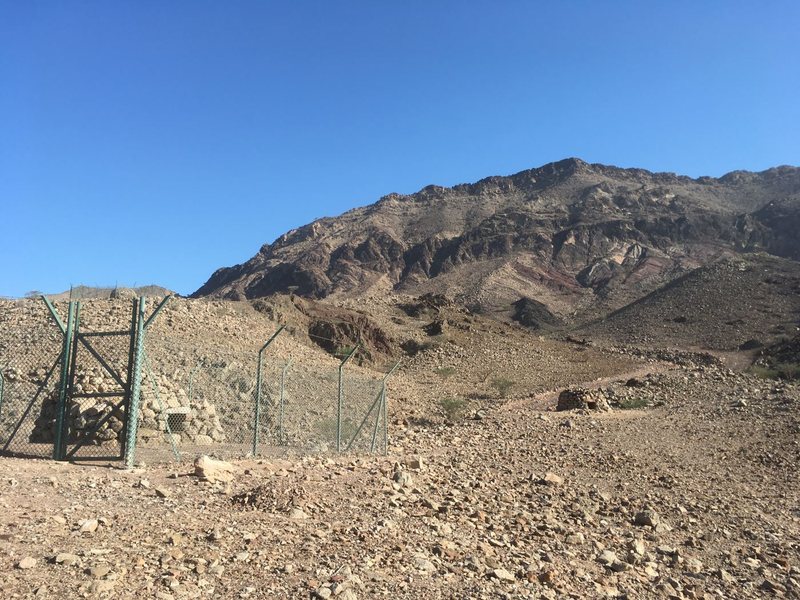
The survey method of the Jabal al-Yamh project combines remote sensing and probabilistic GIS to find tombs in rugged terrain. Tomb distribution and orientation are analysed to build a predictive model for prehistoric tombs in the Hatta Valley.
The Jabal al Yamh tombs (Hatta, Dubai, UAE): the architecture, spatial distribution, and reuse of prehistoric tombs in south-east Arabia
Valente, T.; Contreras, F.; Vila, B.; Fernández, A.; López, D.; Mahmud, A.; Boraik Radwan Karim, M.; Saif Al Mansoori, M.; Zein, H. M. (2022). Proceedings of the Seminar for Arabian Studies 51: 413–431.
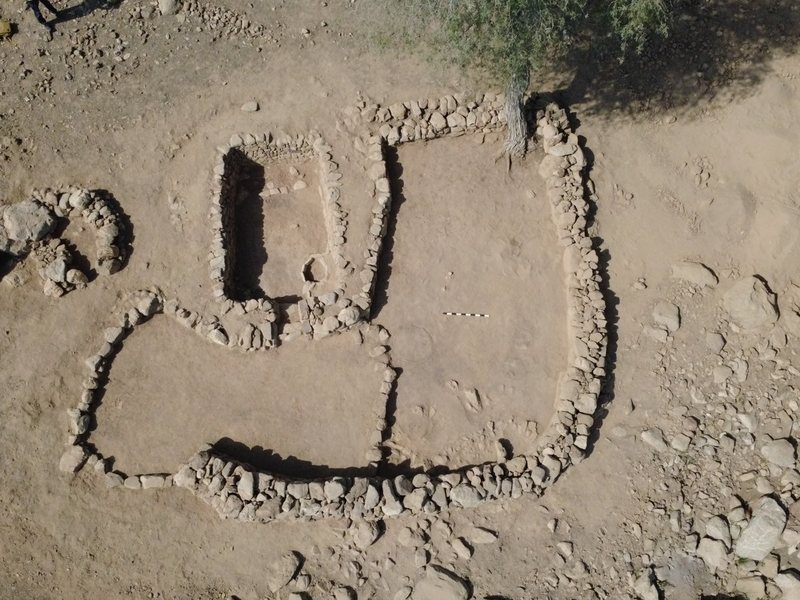
More than seventy tombs on Jabal al Yamh span Hafit, Umm an-Nar, Wadi Suq and Iron Age styles. GIS shows a steady link with the Hatta wadi system, and dates on human remains show the tombs were reused for millennia, up to the 12th century AD.
Desert settlement and ancient coastlines
Al-Ashoosh and the palaeoenvironment of the Dubai coast
Palaeoenvironmental reconstruction of the Dubai Emirate (U.A.E.) coastline from the 3rd millennium BC to 1st millennium AD based on GIS techniques
Fernández, A.; Contreras Rodrigo, F.; Al Ali, B. M.; Boraik, M.; Zein, H. (2026). Annals of Archaeology 8(2): 75–93.
GIS, sedimentology and malacology reconstruct Dubai’s shorelines from 4000 BC to AD 1000. Al-Qusais, Al-Sufouh and Jumeirah, now inland, once lay near coastal and estuarine environments shaped by marine transgressions and mangroves.
Subsistence in the Rub‘ al-Khali during the Umm an-Nar period. A zooarchaeological study on the archaeological site at Al-Ashoosh (Dubai, UAE)
Rodríguez, J.; Contreras, F.; Thomas, J.; Boraik, M.; Zein, H. (2025). International Journal of Humanities and Social Science Research 11(6): 160–166.
A study of the animal bones from the 2015–16 excavation at Al-Ashoosh, a seasonal Umm an-Nar occupation in the Rub‘ al-Khali. Wild species dominate, domestic animals are few and show no clear signs of domestication, which points to seasonal use of the site by hunter-herders in an arid setting.
Al-Ashoosh: a third-millennium BC desert settlement in the United Arab Emirates
Contreras, F.; Carcacer, N.; Thomas, J.; Koljic, D.; Murray, M.; Bukhash, R. M.; Al Abbar, S. O.; Boraik, M.; Zein, H. M. (2016). Antiquity 90(354), Project Gallery.
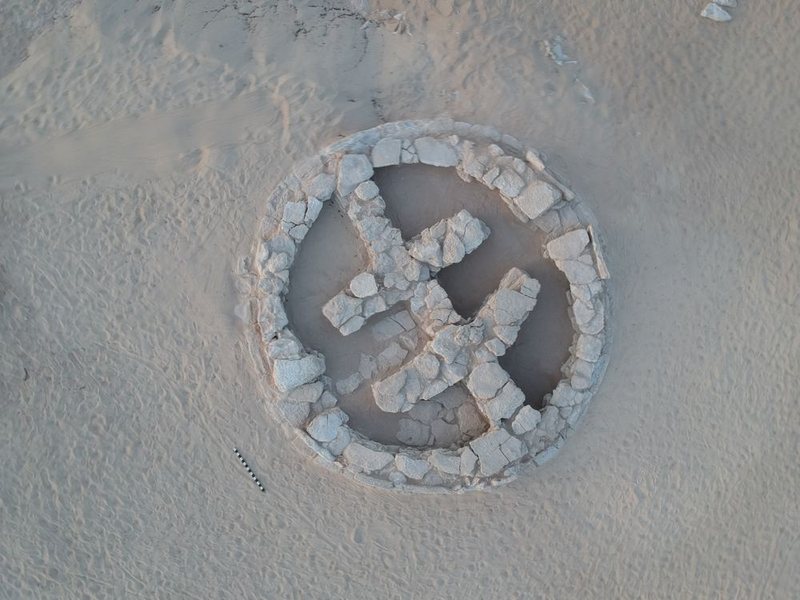
Fieldwork in 2015–16 at Al-Ashoosh, in the Rub‘ al-Khali 70 km south of Dubai, exposed a midden and eight clay combustion structures dated around 2470–2290 BC. Finds include a Gulf Type seal and about 300 kg of animal bone.